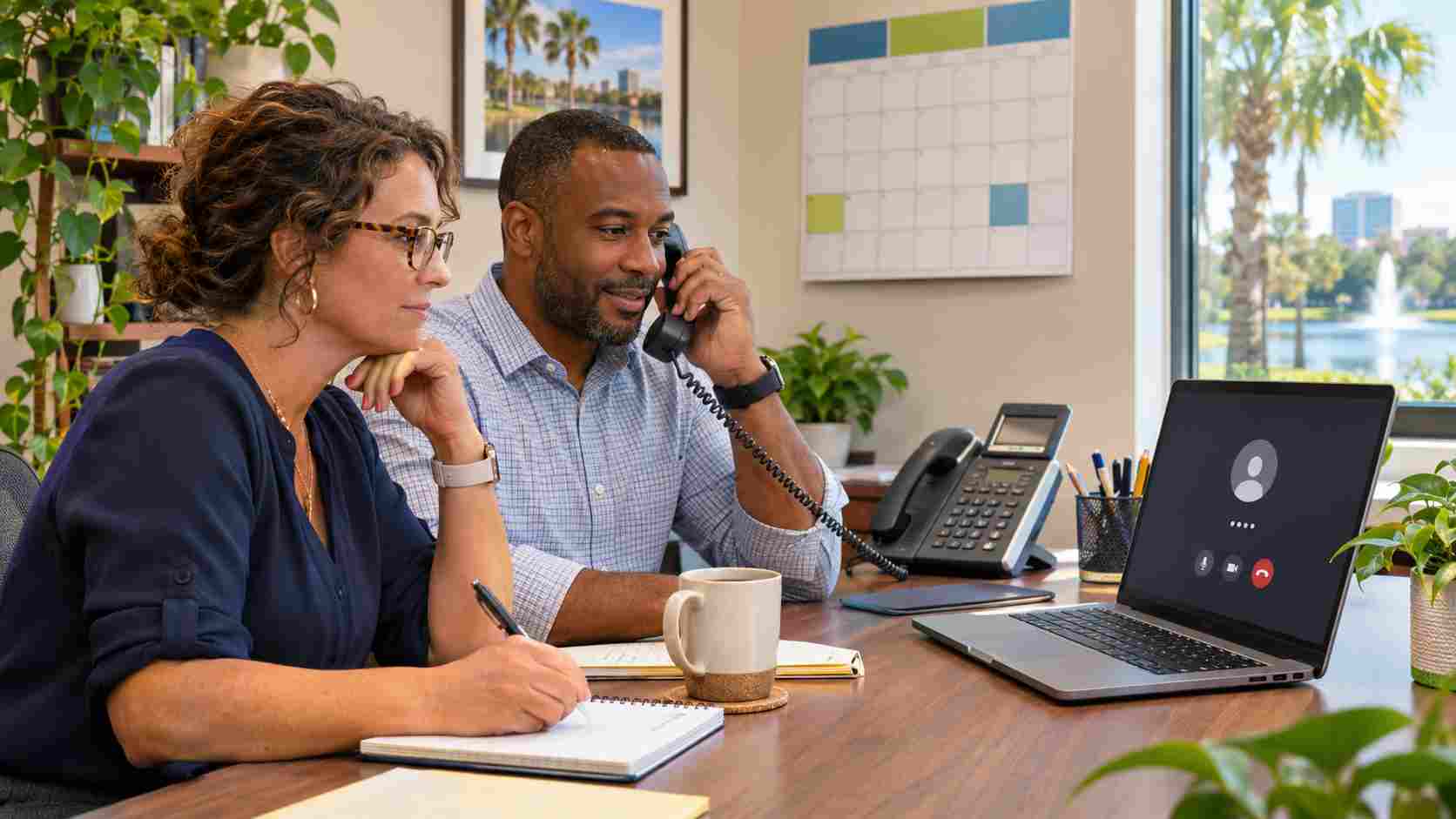
An employee receives a Microsoft Teams call from someone who appears to work in IT. The caller says there is an urgent account or computer problem and asks the employee to open Microsoft Quick Assist.
Because Quick Assist is a legitimate Windows support tool, the request may not look dangerous. However, Microsoft reported on October 30, 2026, that attackers have been impersonating help-desk personnel through Teams messages and calls, then persuading employees to approve remote access.
Once the connection is approved, the person on the other end may be able to view the screen, control the computer, transfer files, or install additional software.
For a small business without a large internal IT department, that can turn one convincing phone call into stolen data, compromised accounts, and significant downtime.
Quick Assist is a real Microsoft application that allows one person to remotely view or control another person’s computer. It is useful when a trusted technician is helping an employee solve a problem.
The danger is not necessarily a flaw in Quick Assist. The danger comes from allowing the wrong person to connect.
Microsoft advises users to permit a Quick Assist connection only when they initiated the support interaction by contacting Microsoft or their own IT provider directly.
The caller may claim that:
The caller may know an employee’s name, company, job title, or email address. They may also use a convincing display name in Teams.
These details do not prove the caller is legitimate. Information about employees and companies is often available through websites, social media, previous data breaches, and public business records.
Employees should not approve remote access in response to an unexpected call, chat, email, or pop-up. A sense of urgency is a reason to slow down, not speed up.
End the call and contact the company’s IT provider using a saved phone number, support portal, or internal directory. Do not use a phone number or link supplied by the caller.
Caller ID and Teams display names can be misleading.
A connection code is effectively a key that can open the computer to remote support. Employees should treat it with the same care as a password or sign-in approval.
Quick Assist asks the user to approve screen sharing and may request permission for full control. Employees should never click Allow simply because someone is guiding them over the phone.
Even when an employee does not approve the connection, reporting the attempt helps the company warn other staff and check whether several people are being targeted.
Employees should feel comfortable reporting a suspicious call without worrying that they will be blamed.
A simple remote-support policy can remove much of the uncertainty. Employees should know:
Businesses that use another remote-support platform should also ask their IT provider whether Quick Assist is needed. Microsoft recommends disabling or removing it when an organization does not use it.
Microsoft Teams external-access settings should be reviewed as well. Businesses can limit outside communication when unrestricted external contact is unnecessary.
Disconnect the remote session immediately and contact your trusted IT provider from another device if possible.
Do not continue signing into email, banking, payroll, or other business systems until the computer and affected accounts have been reviewed. Your IT provider may need to inspect the computer, remove unauthorized access, review Microsoft 365 activity, revoke active sessions, and reset affected credentials.
Write down what happened, including the caller’s name, displayed account, time of contact, instructions given, and any websites or applications opened. Those details can help the investigation.
Employees do not need to recognize every new scam. They need one dependable habit: unexpected support requests must be independently verified before anyone shares information or allows access.


Himala and his team at Cybernetic Networks have been amazing. We have been a customer of Cybernetic Networks for well over 14 years now, both personally and professionally. Himala and his team are professional, reachable and on the cutting edge of technology. We have enjoyed doing business with Cybernetic Networks for many years and still rely on their knowledge, skills and technology every day
Himala and his Cybernetic team have never let me down! For over 10 years now they have been fixing my technical issues, set up all my new networks and computers and have safeguarded me from any hackers or malware. You can trust this company to navigate you as your company grows and to keep you on track with the latest in security and safety
I am a solo practicing neurologist and have had all my IT needs covered through Cybernetic Networks since 2007. They are the best! All of their tech support staff is extremely knowledgeable and efficient. Just as importantly, they are quickly responsive whenever we need their assistance. I couldn’t be happier with their service and give them my highest recommendation!
I couldn't be happier with Cybernetics - they are experts, always respond quickly , and solves any issues I have.
Cybernetic Networks has been advising and supporting all our IT issues and purchases for the last 18 years. They are very responsive and extremely knowledgeable- always providing us with timely services.
It is not often you find small business companies that are not only rewarding to work with, but also have integrity, truth and skill. I have worked with this company for over 20 years, and the service is outstanding. I can easily recommend that if you need an IT company, this is the one to get. Full STOP! Look no further, you will be happy that you did. Sue Myhelic, Gulf Breeze Real Estate, Naples, Florida.
Himala and his team from Cybernetic Networks, Inc. has been an integral part of our successful retail business for the past 20 years. He is extraordinarily knowledgable and always available for our IT needs. Thanks to Himala and his team we are always up and running.