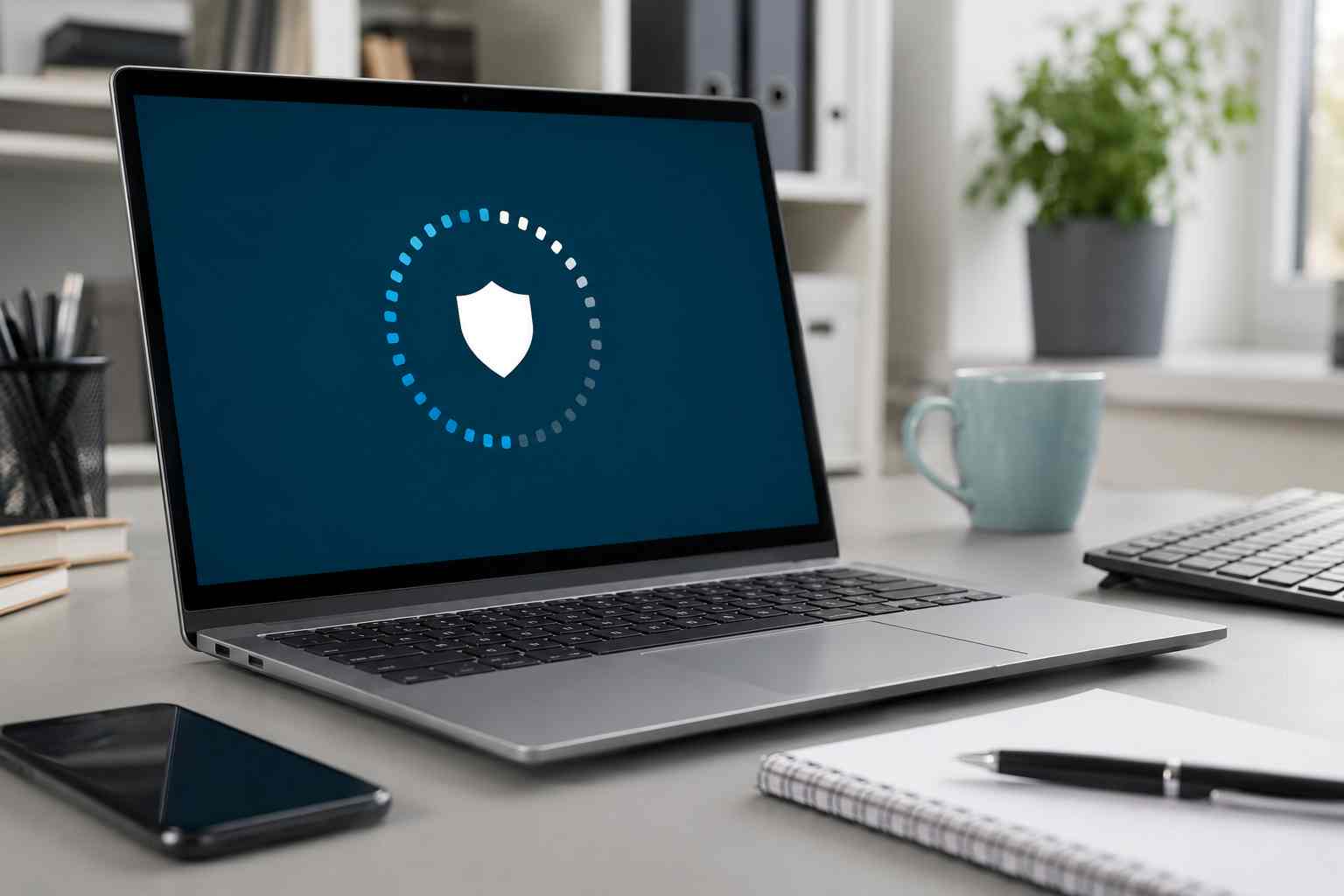
A Windows security problem that Microsoft fixed months ago is receiving renewed attention.
In August 2026, the Cybersecurity and Infrastructure Security Agency, commonly known as CISA, identified CVE-2025-60710 as a vulnerability being used in ransomware campaigns. The issue affects the Host Process for Windows Tasks, a normal Windows component that helps run background processes.
The name sounds highly technical. The business lesson is much simpler: publishing a security update does not protect a computer unless the update is successfully installed.
CVE-2025-60710 is a privilege-escalation vulnerability. In plain English, it may allow someone who already has limited access to a vulnerable computer to gain much more powerful control over it.
This distinction matters. The flaw is not described as a way for someone anywhere on the internet to take over a computer with one click. An attacker generally needs an initial foothold first.
That foothold might come from:
Once inside, an attacker could potentially use this flaw to obtain higher system privileges. Those elevated permissions can make it easier to disable protections, access more information, or prepare the device for ransomware.
Microsoft and the National Vulnerability Database identify affected builds of Windows 11 and Windows Server 2025. Microsoft originally addressed the vulnerability in its November 2025 security updates.
Businesses that routinely installed those updates should already have the protection. Microsoft told BleepingComputer that customers who applied the update are protected and do not need additional action specifically for this flaw.
The uncertainty begins when a business cannot confidently answer questions such as:
A dashboard saying that most devices are current is not the same as confirming that every important device is protected.
Open Windows Update and look for failed, paused, or pending updates. A computer that has not restarted recently may still be waiting to finish an installation.
Avoid downloading unofficial “patches” or update tools from advertisements, pop-ups, or unfamiliar websites.
If an IT provider manages your computers, ask whether it can confirm coverage for CVE-2025-60710 across applicable Windows 11 and Windows Server 2025 systems.
A useful answer should be based on device records and update status, not an assumption that automatic updates probably worked.
Laptops used by traveling or remote employees may miss normal maintenance windows. They may also remain asleep for long periods instead of restarting and completing updates.
Because this vulnerability requires an existing foothold, patching is only part of the response. Small businesses should also maintain:
A backup will not prevent someone from attacking a computer. It can provide a recovery path if ransomware damages or encrypts important systems.
Critical backups should be separated from everyday user access and tested periodically. A backup that has never been restored is still an unanswered question.
CISA’s remediation deadlines in the Known Exploited Vulnerabilities catalog apply to certain federal civilian agencies. They are not automatically legal deadlines for private small businesses.
However, inclusion in the catalog remains a useful warning. It indicates that exploitation is occurring in the real world, rather than existing only as a theoretical possibility.
The ransomware designation makes prompt verification especially sensible.
The most important question is not whether automatic updates are turned on. It is whether someone can identify missed updates, failed installations, devices that have gone offline, and computers that are too old to remain safely in service.

Himala and his team at Cybernetic Networks have been amazing. We have been a customer of Cybernetic Networks for well over 14 years now, both personally and professionally. Himala and his team are professional, reachable and on the cutting edge of technology. We have enjoyed doing business with Cybernetic Networks for many years and still rely on their knowledge, skills and technology every day
Himala and his Cybernetic team have never let me down! For over 10 years now they have been fixing my technical issues, set up all my new networks and computers and have safeguarded me from any hackers or malware. You can trust this company to navigate you as your company grows and to keep you on track with the latest in security and safety
I am a solo practicing neurologist and have had all my IT needs covered through Cybernetic Networks since 2007. They are the best! All of their tech support staff is extremely knowledgeable and efficient. Just as importantly, they are quickly responsive whenever we need their assistance. I couldn’t be happier with their service and give them my highest recommendation!
I couldn't be happier with Cybernetics - they are experts, always respond quickly , and solves any issues I have.
Cybernetic Networks has been advising and supporting all our IT issues and purchases for the last 18 years. They are very responsive and extremely knowledgeable- always providing us with timely services.
It is not often you find small business companies that are not only rewarding to work with, but also have integrity, truth and skill. I have worked with this company for over 20 years, and the service is outstanding. I can easily recommend that if you need an IT company, this is the one to get. Full STOP! Look no further, you will be happy that you did. Sue Myhelic, Gulf Breeze Real Estate, Naples, Florida.
Himala and his team from Cybernetic Networks, Inc. has been an integral part of our successful retail business for the past 20 years. He is extraordinarily knowledgable and always available for our IT needs. Thanks to Himala and his team we are always up and running.