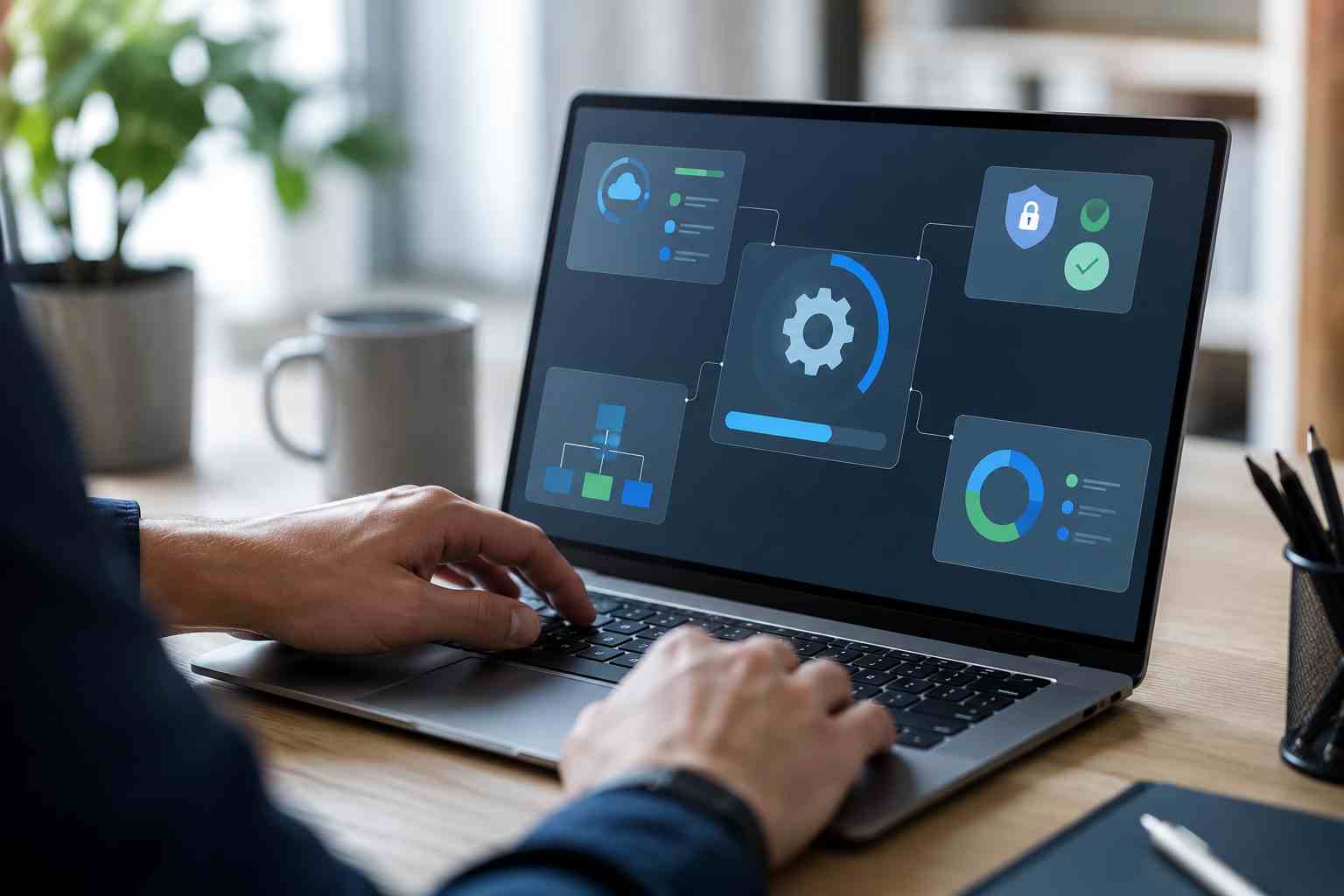
Many small businesses now use automation tools to connect apps, send alerts, update spreadsheets, move customer information, or trigger follow-up tasks. These tools can be incredibly useful because they reduce repetitive work and help small teams move faster.
But there is a security side that often gets overlooked.
If an automation tool connects to email, files, customer records, billing systems, or website forms, it may hold access to some of the most important parts of the business. That means it should be treated like a business-critical system, not just another helpful app.
In July 2026, a high-severity security issue was disclosed in n8n, a popular workflow automation platform. The issue could allow someone with permission to create or edit workflows to run commands on the system hosting n8n. GitHub’s advisory says the issue was fixed in versions 2.31.5 and 2.32.1, and that temporary access restrictions are not a full replacement for updating.
For most small business owners, the technical details are less important than the lesson: automation tools can hold powerful access, and that access needs guardrails.
Think of an automation tool like a trusted employee with keys to several rooms in your office. If that employee only needs access to the supply closet, they should not also have keys to accounting, HR, customer files, and the server room.
The same idea applies to business software.
If a workflow tool connects to your email, website, CRM, cloud storage, accounting platform, or ticket system, it can move information between those places. That is helpful when everything is configured correctly. It can become risky when accounts are shared, old integrations are forgotten, or too many users are allowed to build and edit automations.
Small businesses in Orlando and surrounding areas often adopt automation gradually. One person sets up a form notification. Someone else connects a spreadsheet. Later, a marketing tool, payment platform, or CRM gets added. Over time, nobody has a clear map of what is connected to what.
That creates a few business risks:
The danger is not automation itself. The danger is unmanaged automation.
Start with a simple review. You do not need to become a software expert to ask the right business questions.
Check which automation tools your company uses. This could include tools that connect forms, email, spreadsheets, CRMs, website leads, payment notifications, help desk systems, or reporting dashboards.
Review who can create or edit workflows. Keep this permission limited to trusted users who understand the business impact.
Update self-hosted automation platforms. If your company runs tools such as n8n on your own server or cloud environment, make sure the platform is on a supported, patched version.
Review connected accounts. Automation tools should not use shared owner accounts when a limited service account would be safer.
Remove old workflows. If a workflow is no longer needed, turn it off or delete it after confirming it is not part of a current business process.
Document what each workflow does. A simple list is enough: what it connects, who owns it, what data it touches, and what happens if it stops working.
Every automation should have an owner. That owner should know what the workflow does, what systems it connects, and who to call if it fails.
For small businesses, this keeps automation from turning into mystery wiring behind the walls. It also makes troubleshooting faster when something breaks or an employee leaves.

Himala and his team at Cybernetic Networks have been amazing. We have been a customer of Cybernetic Networks for well over 14 years now, both personally and professionally. Himala and his team are professional, reachable and on the cutting edge of technology. We have enjoyed doing business with Cybernetic Networks for many years and still rely on their knowledge, skills and technology every day
Himala and his Cybernetic team have never let me down! For over 10 years now they have been fixing my technical issues, set up all my new networks and computers and have safeguarded me from any hackers or malware. You can trust this company to navigate you as your company grows and to keep you on track with the latest in security and safety
I am a solo practicing neurologist and have had all my IT needs covered through Cybernetic Networks since 2007. They are the best! All of their tech support staff is extremely knowledgeable and efficient. Just as importantly, they are quickly responsive whenever we need their assistance. I couldn’t be happier with their service and give them my highest recommendation!
I couldn't be happier with Cybernetics - they are experts, always respond quickly , and solves any issues I have.
Cybernetic Networks has been advising and supporting all our IT issues and purchases for the last 18 years. They are very responsive and extremely knowledgeable- always providing us with timely services.
It is not often you find small business companies that are not only rewarding to work with, but also have integrity, truth and skill. I have worked with this company for over 20 years, and the service is outstanding. I can easily recommend that if you need an IT company, this is the one to get. Full STOP! Look no further, you will be happy that you did. Sue Myhelic, Gulf Breeze Real Estate, Naples, Florida.
Himala and his team from Cybernetic Networks, Inc. has been an integral part of our successful retail business for the past 20 years. He is extraordinarily knowledgable and always available for our IT needs. Thanks to Himala and his team we are always up and running.