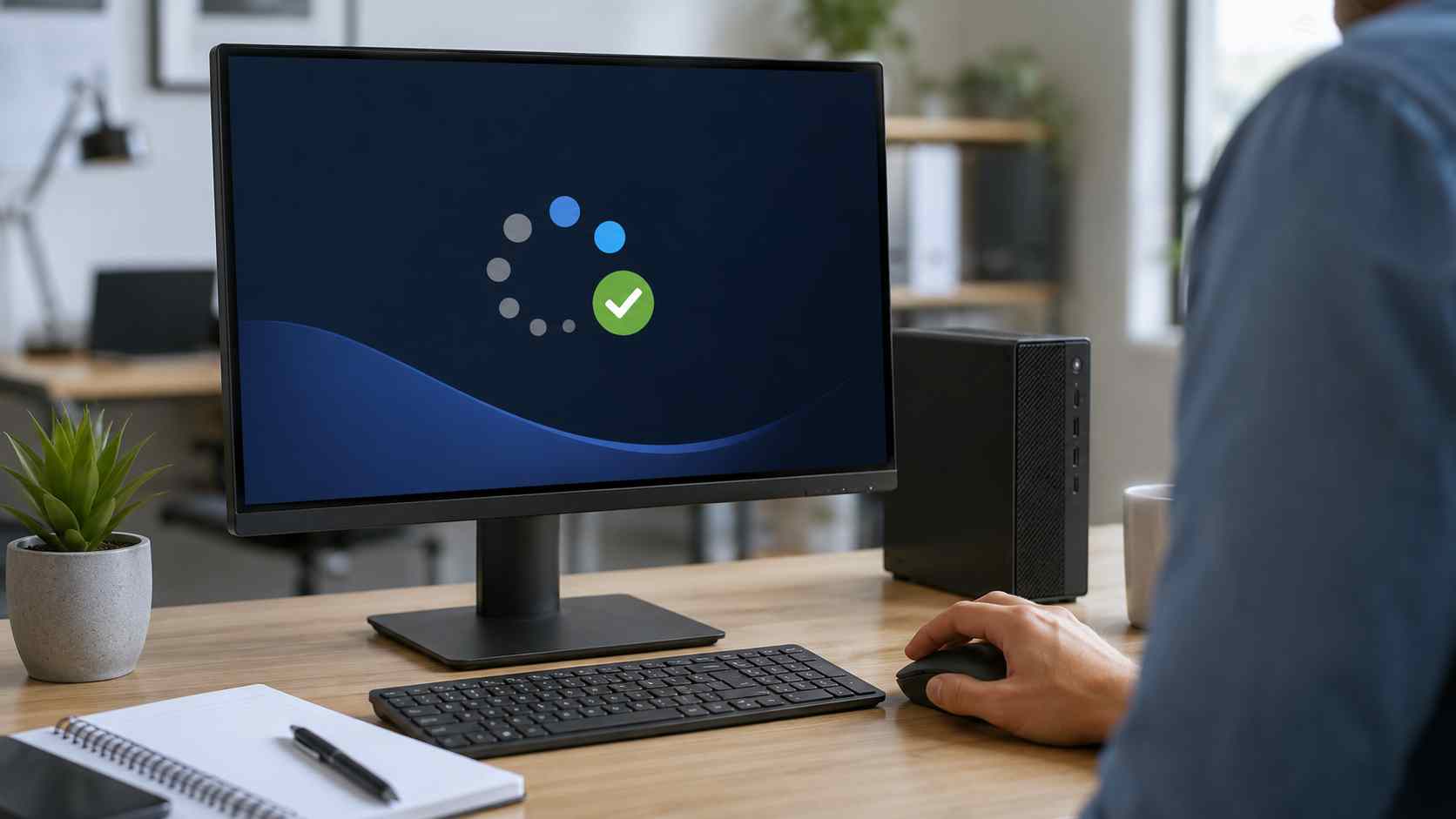
A Windows security flaw patched by Microsoft in November 2025 is receiving new attention because it has now been linked to ransomware activity.
The vulnerability, identified as CVE-2025-60710, affects the Host Process for Windows Tasks, a normal background component in Windows 11 and Windows Server 2025. On August 18, 2026, BleepingComputer reported that the Cybersecurity and Infrastructure Security Agency had marked the flaw as being used in ransomware campaigns.
That does not mean every Windows computer is under immediate attack. It does mean businesses should confirm that the update was installed successfully instead of assuming automatic updates handled everything.
The flaw can allow someone who already has limited access to a computer to gain much broader control.
In plain language, an attacker would first need to get onto the device through another method, such as stolen credentials, malicious software, or a deceptive download. The Windows flaw could then help that attacker move from a basic user account to powerful system-level access.
That higher level of control could make it easier to disable protections, steal information, install additional malicious software, or prepare the computer and connected systems for ransomware.
Microsoft says customers who installed the relevant November 2025 security update are protected. The concern is therefore less about an unavailable fix and more about computers that missed updates, failed during installation, remained offline, or were not properly monitored.
Small businesses often depend on automatic updates without having a reliable way to confirm the result. A computer may appear normal even when it is several months behind.
Common reasons updates get missed include:
One missed update does not guarantee an attack. However, ransomware groups frequently take advantage of several weaknesses in sequence. An exposed account, unsafe download, or infected device becomes more dangerous when the attacker can also exploit an unpatched Windows flaw.
Create a current list of business computers and servers. This review should include office desktops, employee laptops, shared workstations, reception computers, remote devices, and Windows servers.
The reported vulnerability affects Windows 11 and Windows Server 2025. Older operating systems may have different security concerns and should still be reviewed.
Opening Windows Update on one computer is not the same as confirming that every business device is protected.
Your IT provider should be able to show which devices received required updates, which are waiting for a restart, and which have reported installation failures. Any computer that has not checked in recently deserves attention.
Some security updates are not fully applied until the computer restarts. Establish a predictable maintenance window so employees know when devices may reboot.
Staff should also be told not to postpone restarts indefinitely. A short planned interruption is usually preferable to an emergency outage later.
Employees should not use administrator-level accounts for ordinary email, browsing, and office work.
This vulnerability involves gaining higher privileges after an attacker already has some access. Keeping normal users out of administrator accounts adds another barrier and can reduce the damage caused by malicious downloads or stolen credentials.
Updates are essential, but they are only one part of ransomware prevention. Businesses should also use:
Security updates are easier to manage when they are part of a routine process. Waiting until a vulnerability appears in ransomware reporting forces the business to investigate under pressure.
A practical patching process should identify urgent updates, test them where appropriate, deploy them promptly, confirm installation, and follow up on devices that fail or remain offline.

Himala and his team at Cybernetic Networks have been amazing. We have been a customer of Cybernetic Networks for well over 14 years now, both personally and professionally. Himala and his team are professional, reachable and on the cutting edge of technology. We have enjoyed doing business with Cybernetic Networks for many years and still rely on their knowledge, skills and technology every day
Himala and his Cybernetic team have never let me down! For over 10 years now they have been fixing my technical issues, set up all my new networks and computers and have safeguarded me from any hackers or malware. You can trust this company to navigate you as your company grows and to keep you on track with the latest in security and safety
I am a solo practicing neurologist and have had all my IT needs covered through Cybernetic Networks since 2007. They are the best! All of their tech support staff is extremely knowledgeable and efficient. Just as importantly, they are quickly responsive whenever we need their assistance. I couldn’t be happier with their service and give them my highest recommendation!
I couldn't be happier with Cybernetics - they are experts, always respond quickly , and solves any issues I have.
Cybernetic Networks has been advising and supporting all our IT issues and purchases for the last 18 years. They are very responsive and extremely knowledgeable- always providing us with timely services.
It is not often you find small business companies that are not only rewarding to work with, but also have integrity, truth and skill. I have worked with this company for over 20 years, and the service is outstanding. I can easily recommend that if you need an IT company, this is the one to get. Full STOP! Look no further, you will be happy that you did. Sue Myhelic, Gulf Breeze Real Estate, Naples, Florida.
Himala and his team from Cybernetic Networks, Inc. has been an integral part of our successful retail business for the past 20 years. He is extraordinarily knowledgable and always available for our IT needs. Thanks to Himala and his team we are always up and running.