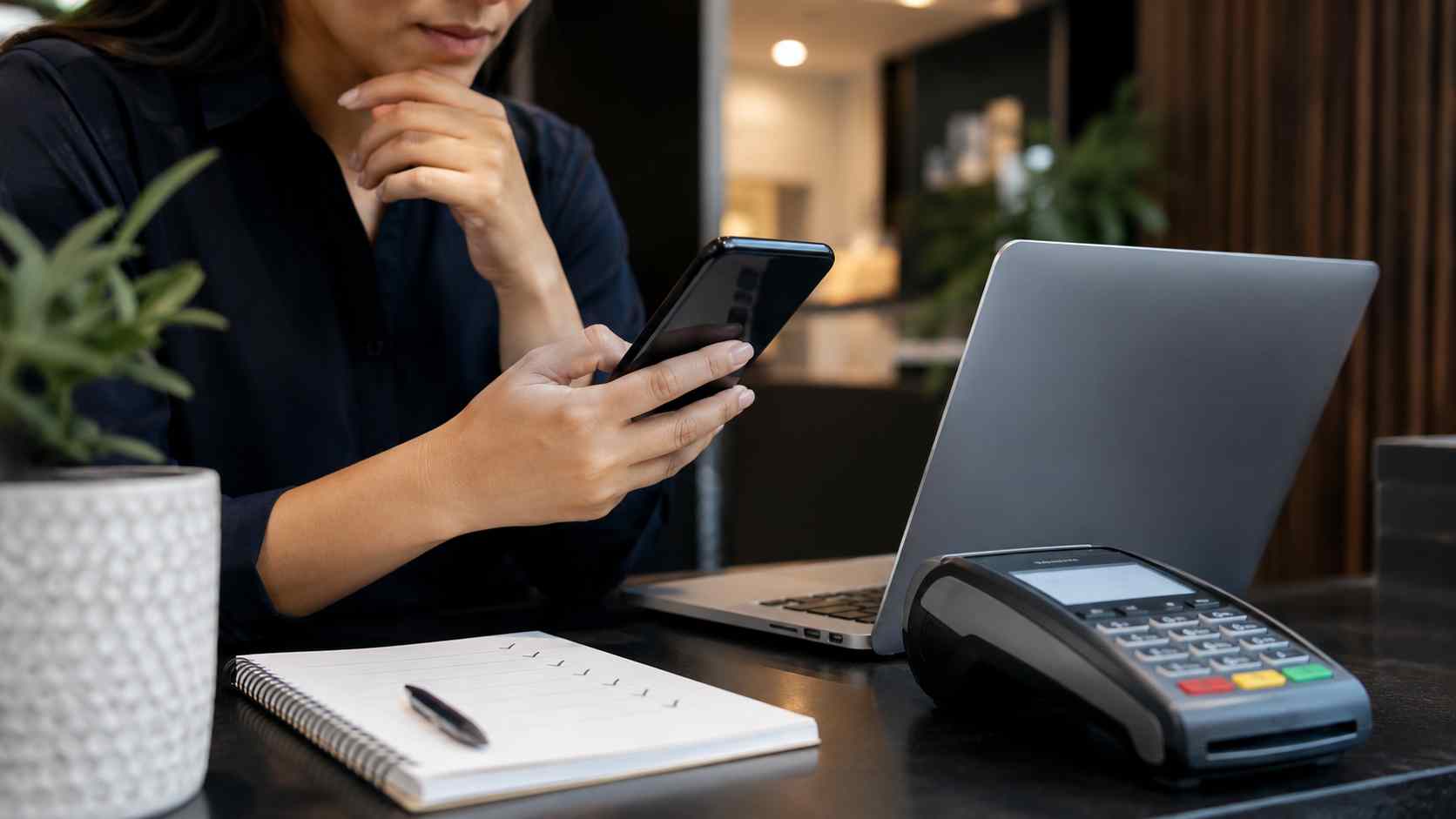
A suspicious text message used to be easier to spot. The wording was awkward, the link looked strange, and most employees knew to be careful.
That is changing. Recent reporting from Google and SecurityWeek described a major phishing operation called Outsider Enterprise that used fake websites, text messages, and AI-assisted tools to help criminals create more convincing scams. The FBI and Google worked to disrupt the operation, but the bigger lesson for small businesses is simple: scam messages are becoming easier to create and harder to recognize.
For Orlando-area small businesses, this matters because employees are constantly using phones for real work. They confirm deliveries, approve payments, check bank alerts, receive vendor messages, and communicate with customers. That makes text-message scams a business risk, not just a personal annoyance.
A text scam, often called “smishing,” is a phishing attack sent by SMS or messaging apps. The message usually tries to rush the person into clicking a link, entering a password, approving a payment, or sharing sensitive information.
Common examples include:
The goal is usually to steal login details, payment information, or access to a business account.
AI can help criminals write better messages, create more convincing fake websites, and copy the tone of real business communication. That does not mean every scam is highly advanced, but it does mean bad messages are getting less obvious.
For small businesses, the practical concern is speed and volume. A criminal does not need to fool everyone. They only need one employee to click the wrong link, approve the wrong request, or enter a password on a fake page.
Start with a simple rule: important business actions should not be approved from a text message alone.
If a message asks an employee to change payment information, buy gift cards, approve a wire, reset a password, or log in through a link, require a second check through a known phone number or trusted internal process.
Small businesses should also:
If the message is urgent, unexpected, or money-related, verify it another way.
That one habit can stop many common scams. A quick call to a manager, vendor, or bank using a known number is much safer than replying to the message or clicking the link.
A successful text scam can lead to stolen funds, exposed customer information, locked accounts, or a business email compromise. Even if the technical damage is limited, the time spent cleaning it up can disrupt operations and hurt trust.
Small businesses do not need to panic, but they do need practical guardrails. The best protection is a mix of employee awareness, secure account settings, and clear approval procedures.


Himala and his team at Cybernetic Networks have been amazing. We have been a customer of Cybernetic Networks for well over 14 years now, both personally and professionally. Himala and his team are professional, reachable and on the cutting edge of technology. We have enjoyed doing business with Cybernetic Networks for many years and still rely on their knowledge, skills and technology every day
Himala and his Cybernetic team have never let me down! For over 10 years now they have been fixing my technical issues, set up all my new networks and computers and have safeguarded me from any hackers or malware. You can trust this company to navigate you as your company grows and to keep you on track with the latest in security and safety
I am a solo practicing neurologist and have had all my IT needs covered through Cybernetic Networks since 2007. They are the best! All of their tech support staff is extremely knowledgeable and efficient. Just as importantly, they are quickly responsive whenever we need their assistance. I couldn’t be happier with their service and give them my highest recommendation!
I couldn't be happier with Cybernetics - they are experts, always respond quickly , and solves any issues I have.
Cybernetic Networks has been advising and supporting all our IT issues and purchases for the last 18 years. They are very responsive and extremely knowledgeable- always providing us with timely services.
It is not often you find small business companies that are not only rewarding to work with, but also have integrity, truth and skill. I have worked with this company for over 20 years, and the service is outstanding. I can easily recommend that if you need an IT company, this is the one to get. Full STOP! Look no further, you will be happy that you did. Sue Myhelic, Gulf Breeze Real Estate, Naples, Florida.
Himala and his team from Cybernetic Networks, Inc. has been an integral part of our successful retail business for the past 20 years. He is extraordinarily knowledgable and always available for our IT needs. Thanks to Himala and his team we are always up and running.