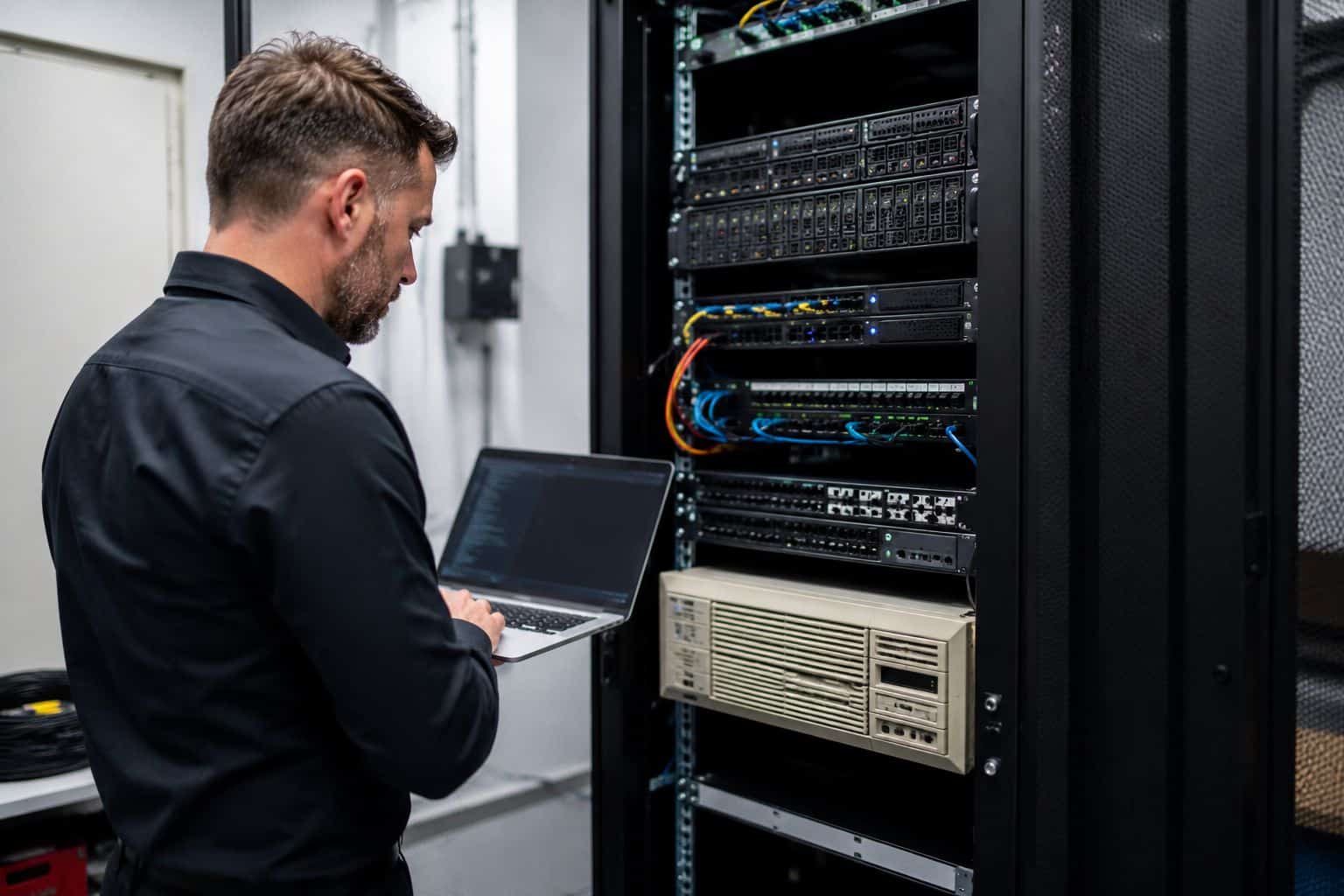
Most small businesses do not think much about their server until something breaks.
That is part of the problem. A server can sit quietly in a closet or back office for years, handling file storage, line-of-business software, backups, or user logins. If it is still running Windows Server 2012 or Windows Server 2012 R2, the business may be depending on a system that is already past normal support and moving toward a final security deadline.
Microsoft ended support for Windows Server 2012 and 2012 R2 on October 10, 2023. Paid Extended Security Updates are available only through October 13, 2026.
A lot of older servers are still in use because they “still work.” The trouble is that working and being safely supportable are not the same thing.
By May 11, 2026, businesses using Windows Server 2012 are down to the final stretch of that paid extension period. That means there is limited time left before even the extra security-update bridge runs out.
For a small business, that creates real pressure around:
Extended Security Updates, often called ESU, are meant to buy time. They are not a long-term answer.
They can help eligible Windows Server 2012 systems continue receiving critical security updates for a limited period, but they do not make an aging server modern. They do not fix old hardware, simplify future migrations, or guarantee that attached business applications will keep behaving well as the rest of your environment moves forward.
In plain business terms, ESU is a temporary runway, not a reason to stop planning.
When one outdated workstation has a problem, one person may be slowed down.
When an outdated server has a problem, it can affect the whole business.
Depending on how your environment is set up, a Windows Server 2012 machine may be tied to shared folders, backups, remote access, line-of-business apps, user authentication, or older databases. That means one aging server can turn into a company-wide interruption.
For small businesses around Orlando, where teams often rely on a lean internal setup and need systems to stay available during busy workdays, that is a serious operational risk.
If your company may still have a Windows Server 2012 system in service, these are the questions worth asking:
A surprising number of businesses know they have an old server but do not have clear answers to those questions.
Some legacy servers are no longer essential but were never fully retired. Others are still carrying important work quietly in the background.
Before making any change, identify file shares, applications, backup jobs, user logins, printers, databases, and remote access services tied to the server.
If the server is still needed today, confirm whether it is properly covered under the current Extended Security Update path and how long that coverage lasts.
Some businesses need a newer on-premises server. Others are better served by moving specific workloads to Microsoft 365, Azure, or another modern platform. In some cases, the right answer is simply retiring what is no longer needed.
Server projects take longer than desktop replacements. There are files, permissions, apps, backups, and dependencies to think through. The closer you get to October 13, 2026, the easier it becomes for a manageable project to turn into a rushed one.
A Windows Server 2012 system in 2026 is not just “older infrastructure.” It is a clock that is already running.
For a small business, the real goal is not just swapping out one box in a closet. It is making sure the systems that keep staff working, files accessible, and services available do not become the source of avoidable downtime or security risk. Cybernetic Networks helps businesses map out those server transitions clearly, so the upgrade happens on your schedule instead of during a crisis.


 Trustindex verifies that the original source of the review is Google.
  Trustindex verifies that the original source of the review is Google.
  Trustindex verifies that the original source of the review is Google.
  Trustindex verifies that the original source of the review is Google.
  Trustindex verifies that the original source of the review is Google.
  Trustindex verifies that the original source of the review is Google.
  Trustindex verifies that the original source of the review is Google.
  Trustindex verifies that the original source of the review is Google.
  Trustindex verifies that the original source of the review is Google.
  Trustindex verifies that the original source of the review is Google.
Himala and his team at Cybernetic Networks have been amazing. We have been a customer of Cybernetic Networks for well over 14 years now, both personally and professionally. Himala and his team are professional, reachable and on the cutting edge of technology. We have enjoyed doing business with Cybernetic Networks for many years and still rely on their knowledge, skills and technology every day
Himala and his Cybernetic team have never let me down! For over 10 years now they have been fixing my technical issues, set up all my new networks and computers and have safeguarded me from any hackers or malware. You can trust this company to navigate you as your company grows and to keep you on track with the latest in security and safety
I am a solo practicing neurologist and have had all my IT needs covered through Cybernetic Networks since 2007. They are the best! All of their tech support staff is extremely knowledgeable and efficient. Just as importantly, they are quickly responsive whenever we need their assistance. I couldn’t be happier with their service and give them my highest recommendation!
I couldn't be happier with Cybernetics - they are experts, always respond quickly , and solves any issues I have.
Cybernetic Networks has been advising and supporting all our IT issues and purchases for the last 18 years. They are very responsive and extremely knowledgeable- always providing us with timely services.
It is not often you find small business companies that are not only rewarding to work with, but also have integrity, truth and skill. I have worked with this company for over 20 years, and the service is outstanding. I can easily recommend that if you need an IT company, this is the one to get. Full STOP! Look no further, you will be happy that you did. Sue Myhelic, Gulf Breeze Real Estate, Naples, Florida.
Himala and his team from Cybernetic Networks, Inc. has been an integral part of our successful retail business for the past 20 years. He is extraordinarily knowledgable and always available for our IT needs. Thanks to Himala and his team we are always up and running.